
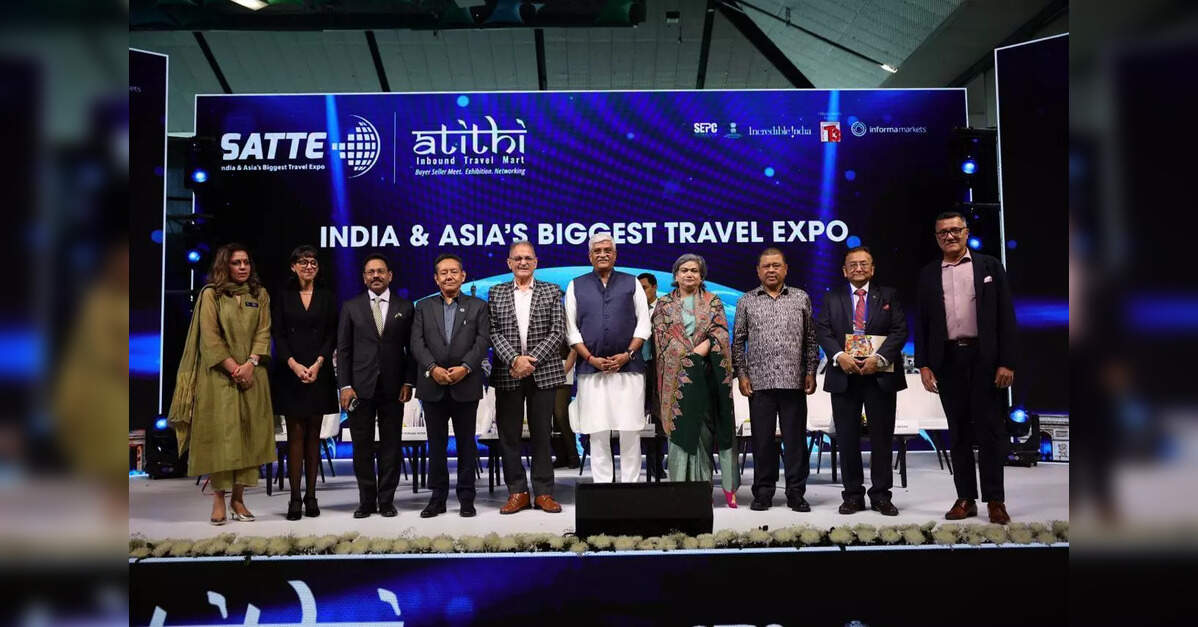

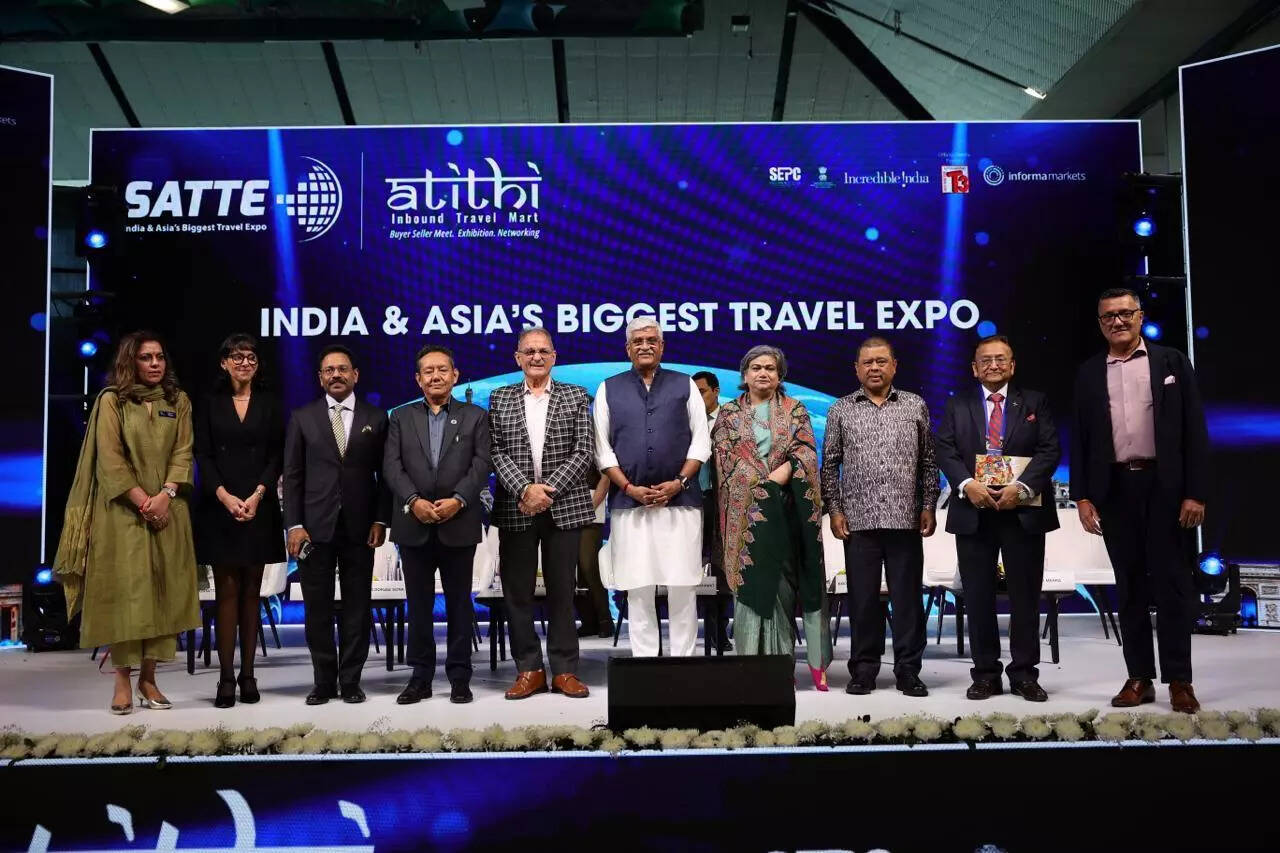
Union Tourism and Culture Minister Gajendra Singh Shekhawat has emphasised that tourism now stands at the heart of India’s development strategy, reflecting its growing contribution to economic transformation, job creation and international engagement.
“Over the past three decades, India’s tourism movement has clearly arrived on the global stage. When the world searches for experiences of depth and diversity, it inevitably discovers India,” said Shekhawat. “Under the leadership of Hon’ble Prime Minister Shri Narendra Modi ji, tourism has moved from the margins of policy to the centre of national development. Through initiatives like Swadesh Darshan 2.0, we are building sustainable destinations rooted in local culture and ecology.” – the minster said at SATTE.
He noted that India’s spiritual circuits, including Ayodhya, Ujjain and Kashi, have undergone a remarkable transformation, turning pilgrimage travel into a world-class experience. “Through initiatives such as Dekho Apna Desh, Indians are rediscovering India, and domestic tourism has reached unprecedented levels, energising Tier-2 and Tier-3 cities. This strong internal demand makes India one of the most resilient tourism markets globally,” he added.
Suman Billa, Director General and Additional Secretary, Ministry of Tourism, Government of India, said that India stands at the beginning of a long-term tourism growth cycle. “With 20 million inbound visitors, 30 million outbound travellers, and nearly 3 billion domestic journeys, demand is significantly outpacing supply. Our focus is on enabling easier travel through digital innovation and infrastructure, and improving the ease of doing business through reforms and deregulation,” he said.
Anita Mendiratta, Special Advisor to the Secretary General, UN Tourism, observed, “The real story of India’s tourism future is not just about scale; it’s about people. Today’s travellers want authenticity, community and purpose – values that define India’s living culture and hospitality.”
With strategic investments in connectivity, infrastructure and cultural revival, India’s tourism ecosystem is positioning the country as a global leader in sustainable and inclusive travel.
As SATTE 2026 progresses over the next two days, the focus will remain on structured business interactions, knowledge exchange, and cross-border partnerships, further reinforcing its position as South Asia’s leading travel trade exhibition and a key catalyst for India’s tourism growth trajectory